
Garage Door Openers
Belt, chain and wall-mount openers with smartphone control.
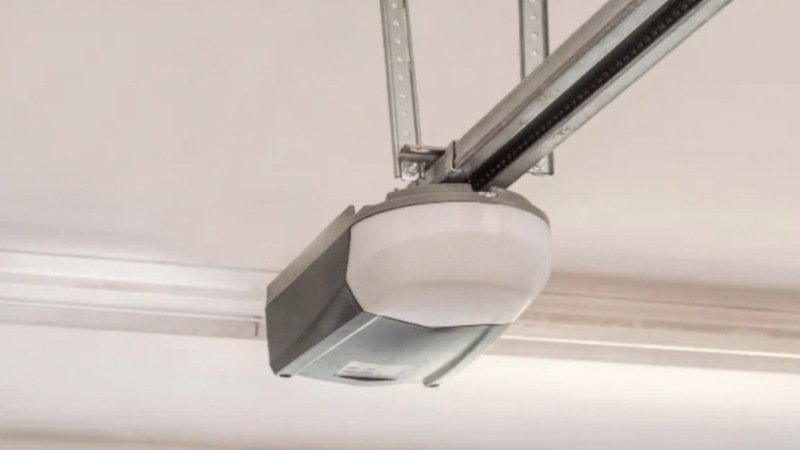
Quiet belt-drive, chain-drive and jackshaft wall-mount openers with app control, cameras and battery backup.
Wall-mount openers free the ceiling entirely, which matters for garages with storage racks or low headroom.
Every opener install includes force and travel calibration plus a safety-reverse test at the door, not just at the wall button.
Reasons to replace an opener
- A chain drive loud enough to be heard through the bedroom above the garage
- An opener straining, humming or needing several attempts to lift the door
- No rolling-code security on a unit old enough to use fixed codes
- No battery backup, so the garage is unusable during an outage
- Wanting to open, close and check the door from a phone
- Low headroom that a traditional overhead rail cannot work with
How we size and set one up
We weigh the door in effect by checking its balance first. Fitting a new opener to an unbalanced door transfers the problem straight to the new motor.
Horsepower or force rating is matched to the door's weight and size — an insulated or full-view door is considerably heavier than a basic single-skin panel.
Safety photo-eyes are installed at the correct height and aligned, and force and travel limits are set so the door reverses on obstruction as it should.
We pair remotes, the wall control, keypads and app access with you before handover, and show you the manual release.
Drive types
- Belt drive
- Quietest option — the usual choice for a garage under living space.
- Chain drive
- Robust and economical, but audible.
- Screw drive
- Fewer moving parts, good with heavier doors.
- Wall-mount (jackshaft)
- Mounts beside the door — frees the ceiling and suits low headroom.
- Battery backup
- Keeps the door working through power outages.
- Smartphone and camera integration
- Remote operation, status alerts and shared access.
What affects the scope and the price
- Door weight, size and insulation
- Available headroom and ceiling structure for mounting
- Existing wiring and whether an outlet is present at the mount point
- Number of remotes, keypads and users to configure
- Whether the door needs rebalancing before the new opener goes on
What's included
- Belt, chain and jackshaft wall-mount units
- Battery backup for power outages
- Smartphone app and camera integration
- Remote, keypad and vehicle programming
Getting the life out of it
An opener lasts longest on a well-balanced door. If the door is heavy by hand, the opener is doing work it was never sized for.
Test the safety reverse and clean the photo-eye lenses periodically — dust and spider webs are a common cause of a door that will not close.
Related services
- fix the door itself before replacing the opener
- replace the door and opener together
- keep the opener on a service schedule
Not sure which applies to your property? Send us the details and we will tell you, or check whether we cover your area.